
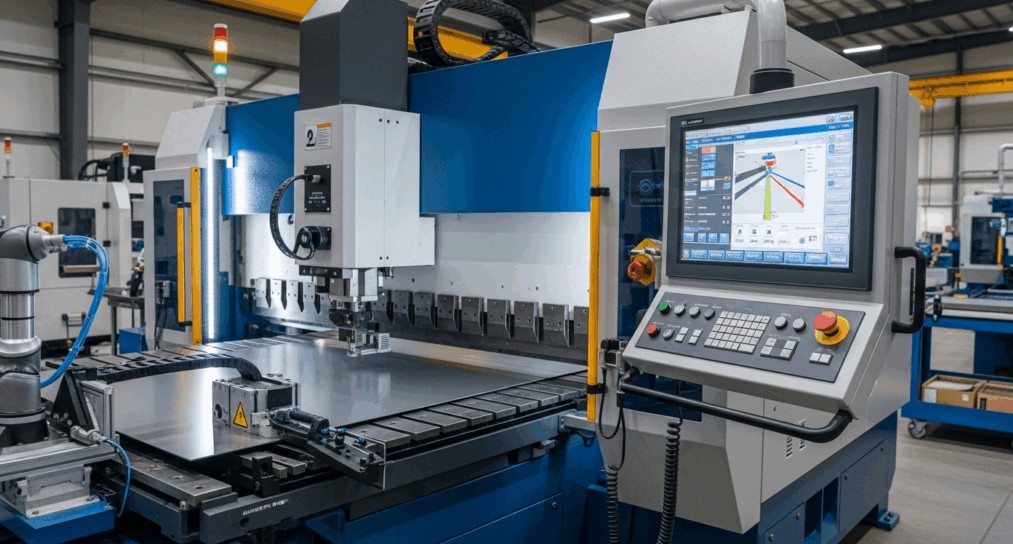
Choosing the right shearing machine is important for any metal fabrication shop. Mechanical shears, hydraulic shears, and CNC shears each have different strengths. This guide compares them side by side so you can understand their differences and pick the best option for your needs.
What Are Mechanical Shears?
Mechanical shears are the traditional type of shearing machines. They use a flywheel and clutch system powered by an electric motor to create the cutting force.
These machines are simple in design. When you step on the pedal or press the button, the flywheel releases energy to drive the upper blade down. They work fast for straight cuts on sheet metal.
Mechanical shears are usually more affordable and easy to maintain. They are a good choice for small workshops with steady, simple cutting jobs. However, they have fixed stroke lengths and limited control over the cutting speed and pressure.
What Are Hydraulic Shears?
Hydraulic shears use hydraulic cylinders and fluid pressure to move the cutting blade. An electric pump builds up pressure, which gives strong and consistent force.
These machines are very popular today because they offer smooth operation and better control. You can adjust the cutting angle, blade gap, and pressure more easily. Hydraulic systems also handle thicker materials better than mechanical ones.
They run quieter and have less vibration. Many models include safety features like light curtains and automatic back gauges. Hydraulic shears are reliable for medium to heavy production work.
What Are CNC Shears?
CNC shears combine hydraulic power with computer numerical control. The CNC system lets you program exact cut lengths, quantities, and sequences through a touchscreen or computer.
These machines are the most advanced. They can run multiple cuts automatically with very high accuracy. The operator sets up the job once and the machine does the rest with minimal manual adjustment.
CNC shears often include powered back gauges, automatic blade gap adjustment, and data storage for repeated jobs. They are ideal for shops that need high precision and fast changeovers between different orders.
Power and Cutting Capacity
Mechanical shears provide good power for thin to medium sheets but struggle with very thick materials. Their cutting force is fixed and depends on the flywheel speed.
Hydraulic shears deliver stronger and more consistent force. They can cut thicker plates without losing performance. The pressure stays steady throughout the cut.
CNC shears usually use hydraulic systems underneath, so they match or exceed the capacity of standard hydraulic models. The main advantage is the precise control, not necessarily more raw power.
Precision and Accuracy
When it comes to precision, mechanical shears are the most basic. They work well for rough cuts but may have slight variations in cut length.
Hydraulic shears offer better accuracy thanks to adjustable controls and smoother blade movement. Most models can hold tolerances within 0.5mm or better.
CNC shears are the clear winner here. They can repeat exact cuts with tolerances as tight as 0.1mm or less. The computer control removes human error in positioning and measuring.
Speed and Productivity
Mechanical shears are fast for single cuts and simple jobs. However, each cut usually needs manual positioning.
Hydraulic shears are a bit slower per cut but allow faster overall workflow because of better material handling features.
CNC shears shine in productivity for batch work. Once programmed, they cut many pieces automatically with minimal operator input. This makes them much faster when you have repetitive orders.
Ease of Use and Operator Skill
Mechanical shears are simple to learn and operate. New operators can start using them quickly.
Hydraulic shears need a little more training, especially to set the right blade gap and pressure for different materials.
CNC shears require the highest skill level at the beginning. Operators must learn the control software. However, after training, they actually make the job easier because the machine handles most of the complex work.
Maintenance and Operating Costs
Mechanical shears have fewer parts, so maintenance is straightforward and cheap. You mainly need to lubricate moving parts and check the clutch.
Hydraulic shears need regular oil checks, filter changes, and seal inspections. The hydraulic system adds some maintenance but is generally reliable.
CNC shears have the highest initial maintenance needs because of both the hydraulic system and the electronic controls. However, good preventive care keeps downtime low. Over time, their efficiency can lower the cost per cut.
Cost Comparison
Mechanical shears are the least expensive to buy. They are a budget-friendly option for small shops.
Hydraulic shears cost more than mechanical but less than CNC models. They give a good balance between price and performance.
CNC shears are the most expensive upfront. Many shops start with hydraulic and upgrade to CNC when production volume increases.
Pros and Cons Summary
Mechanical Shears Pros: Low price, simple design, fast for basic cuts, easy maintenance. Cons: Less precision, limited on thick materials, more noise and vibration.
Hydraulic Shears Pros: Strong cutting force, smooth operation, good precision, versatile. Cons: Higher price than mechanical, more maintenance than mechanical.
CNC Shears Pros: Highest accuracy, excellent productivity, automation, repeatable results. Cons: Highest cost, needs skilled operators, more complex maintenance.
Which Type Is Right for Your Business?
Consider your daily cutting volume, material thickness, and required precision. Small workshops with occasional jobs often do well with mechanical or standard hydraulic shears. Medium to large fabricators benefit from hydraulic or CNC models.
If you cut many different sizes and need fast setup times, CNC shears can quickly pay for themselves through higher productivity.
For reliable shearing machines from China, check out options at https://miharmle-cnc.com/.
Final Thoughts
Mechanical shears, hydraulic shears, and CNC shears each serve different purposes. Mechanical models are simple and affordable. Hydraulic shears add power and control. CNC shears bring automation and top-level precision.
Take time to evaluate your current and future needs before buying. Think about material types, cutting volume, available budget, and operator skills. The right shearing machine will improve your workflow, reduce waste, and help your business grow.
Many shops start with a hydraulic model and add CNC capability later. Whatever you choose, focus on quality construction and good after-sales support. A well-chosen shearing machine becomes a long-term asset in your metal fabrication shop.

Elsa Lund is a language enthusiast and founder of Grammar Guide, where she shares expert tips on English grammar, writing, and communication. Her clear, practical advice helps readers write with confidence and precision. Follow Elsa for more easy-to-understand grammar tips and writing insights.