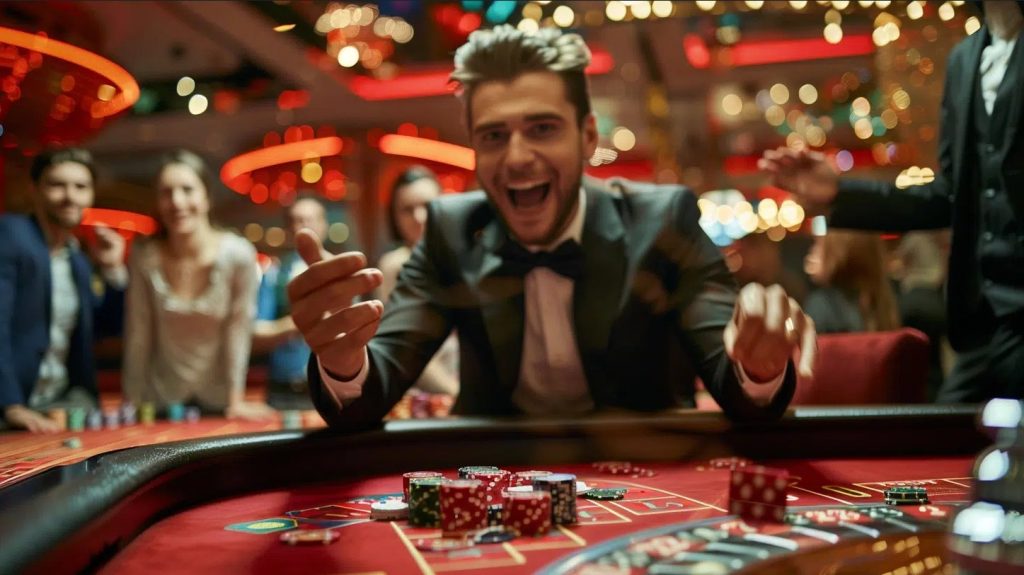
Most people planning a spontaneous weekend still default to the wrong choice for the wrong reasons. Casino nights and live music sets occupy entirely different psychological spaces — one is driven by anticipation and agency, the other by atmosphere and surrender. Treating them as equivalent options misreads what each actually delivers, and that misreading costs you the weekend.
The Weekend Decision Is Already Made Before You Know It
According to a 2025 Nielsen Entertainment survey, 67% of adults aged 25–44 make unplanned leisure decisions within a 3-hour window on Friday evening. That narrow slot determines everything — the social energy you bring, the budget ceiling you accept, the kind of stimulation you’re actually chasing. A casino night and a live music set both fit inside that window, but they respond to entirely different internal states.
Casino environments — whether at a physical venue or through new casino sites UK, which offers live dealer tables with real-time odds streaming — demand active participation. You are not a spectator. Every decision carries weight, every round resets the dynamic. Live music, by contrast, asks nothing. You stand in the crowd, receive the performance, and let the sound do the work. One format extracts effort; the other absorbs it.
A freelance culture journalist writing for an independent Berlin-based events magazine described it plainly in early 2026: “I stopped asking what I wanted to do and started asking how much mental energy I had left. Casino nights require a kind of readiness. Gigs forgive you for showing up empty.”
Live Dealers Change the Odds Dynamic
The rise of live dealer formats at platforms— which provides HD-streamed blackjack and roulette with professional dealers operating across multiple time zones — has fundamentally changed what a “casino night” means in 2026. You no longer need a physical venue. The experience begins within minutes of a spontaneous decision, with no dress code, no travel, and no minimum spend threshold beyond the table stake.
This accessibility shifts the comparison with live music significantly. In major European cities, the average ticket price for a standing live music event in 2026 sits at approximately £38, according to Statista’s Live Entertainment Index published in Q1 2026. Add transport and drinks, and the actual spend reaches £65–80 per person. A live dealer session at casino sites UK, structured around a fixed session budget, can deliver two to three hours of high-engagement entertainment within that same range — or well below it.
The experience density is the decisive variable. Live music delivers approximately 90–120 minutes of active performance per event. A structured casino session — three rounds of poker, two rounds of roulette — spans a comparable time window but with roughly four times the number of individual decision points per hour. For certain personalities, decision density equals engagement depth.
What the Crowd Actually Tells You About Each Option
Social context shapes leisure quality more than the activity itself. A 2024 study published in the Journal of Leisure Research found that perceived social belonging during unplanned leisure events increased overall satisfaction scores by 31%, regardless of the activity type. Both casino nights and live music sets offer community — but the kind of community differs sharply.
Casino Environments Build Micro-Communities Around Tables
At a casino table — physical or virtual through a platform, which integrates live chat and multi-seat table views — the group forms around shared stakes and immediate outcomes. Strangers become temporary allies or quiet rivals within minutes. The social bond is transactional but intense, built on a shared present-tense reality. An anonymous regular player on a UK-based gambling forum noted in March 2026: “You talk to people at a blackjack table the way you talk to people on a long-haul flight. There’s a natural closeness because you’re both suspended in the same moment.”
Live Music Sets Build Community Through Shared Passivity
Live music crowds cohere differently. The connection is lateral — you and the stranger beside you both face the same stage, both experience the same set list, both surrender agency to the performer. Research from the University of Oxford’s music cognition group, updated in 2025, confirmed that synchronised movement in concert settings — clapping, swaying — produces measurable increases in oxytocin levels, strengthening feelings of social connection even among strangers. The bond here is emotional rather than strategic. Neither is superior; they serve different psychological needs.
Spontaneity Has a Different Architecture in Each Format
An unplanned casino night — especially through always-on new casino sites UK, which runs live tables 24 hours a day including weekends — requires zero pre-commitment. No tickets, no queues, no sold-out risk. Live music, even in 2026, still operates on scarcity. Venue capacities cap between 300 and 3,000 for most mid-tier acts. Last-minute availability at premium events dropped to below 12% in 2025 according to Eventbrite’s annual live event access report.
That structural difference matters enormously for the genuinely unplanned weekend. Casino formats have zero friction from decision to participation. Live music sets carry logistical risk — the show you want may simply not be accessible at the moment you want it.
Counterargument Deserves Honest Treatment
The strongest case against defaulting to casino nights as weekend entertainment rests on a few legitimate points. Here is a balanced assessment of both options:
| Factor | Casino Night | Live Music Set |
| Accessibility (spontaneous) | High — instant access via sites | Low — ticket availability limits options |
| Social bonding type | Strategic, table-based micro-group | Emotional, crowd-wide shared experience |
| Average spend (2026) | Variable — session-controlled budgets possible | £65–80 per person including transport and drinks |
| Duration of engagement | Flexible — 30 minutes to several hours | Fixed — 90 to 120 minutes of performance |
| Mental energy required | High — active decision-making throughout | Low — passive reception |
| Cultural memory value | Moderate — moment-specific | High — tied to specific artist or era |
The honest counterargument here is cultural permanence. Live music attaches itself to memory in ways a casino session rarely does. Ask someone about a concert from five years ago and they will name the song, the crowd, the smell of the venue. That kind of anchored memory has a different value than the sharp but time-limited intensity of a casino night.
Nine Options Does Not Mean Nine Equal Choices
When the weekend opens unexpectedly and both formats sit on the table, the selection criterion should be energy state, not preference. High cognitive energy, a group of three or more, and a budget ceiling of £50 per person points directly toward a structured casino session — ideally through a platform, which offers guided onboarding for new players and session summary tools. Low energy, a pair, and no budget constraint points toward live music — but only if a show is actually available.
The framing of “9 options” is itself instructive. Real spontaneous weekends rarely involve nine deliberate choices. They involve one default and several rationalised alternatives. Understanding which format actually matches your state on a given Friday night is more valuable than any ranked list of activities.

Elsa Lund is a language enthusiast and founder of Grammar Guide, where she shares expert tips on English grammar, writing, and communication. Her clear, practical advice helps readers write with confidence and precision. Follow Elsa for more easy-to-understand grammar tips and writing insights.